If you’ve been seeing tufted rugs everywhere lately and wondering, “Could I actually make that?”, the answer is yes. Tufting looks intimidating at first, but with the right setup, it’s surprisingly approachable, even for beginners.
Disclosure: I received the press from CLAWLAB. All opinions are 100% mine. This post contains affiliate links and I will be compensated if you make a purchase after clicking on my links, at no additional cost to you.
In this tutorial and review, I’m walking you through exactly how to make a tufted rug using the Clawlab H1 Tufting Gun and Frame, plus all the finishing steps people don’t always talk about, trimming, shaping, and three different ways to back your rug, including TPU powder with a heat press, white glue, and spray adhesive.
I’ll also share multiple ways to transfer your design to the canvas, whether you have a projector or not.
If you’re a novice or expert crafter or just love learning new hands-on crafts, tufting is a really fun creative rabbit hole to fall into., so let’s get started!

What Is Tufting?
Tufting is a fiber art technique where yarn is pushed through a stretched fabric (usually monk cloth) to create a raised design. The loops or cut pile form the front of the rug or wall art, while the back is later sealed and reinforced.
Traditionally, tufting was done with punch needles by hand, but electric tufting guns make the process faster, smoother, and much easier on your hands, especially for larger projects like rugs.

What’s Included in the Clawlab H1 Tufting Kit
The Clawlab H1 Tufting Kit is designed to be a true beginner starter kit, which means you don’t have to source everything separately before you start.

Included in the kit:
-
Electric tufting gun
-
Easy-clamp tabletop tufting frame (approximately 39″ × 25″)
-
Monk cloth for tufting
-
Backing fabric
-
Starter yarn
-
Threaders, lubricant, cleaning brush, and instructions
What you’ll need to add:
-
✂️ Rug trimmer or sharp scissors (for shaping and carving)
-
Backing option (TPU powder, white glue, or spray adhesive)
-
Heat press (if using TPU powder)
This is important to know upfront — the finishing tools are what turn your tufted piece into a finished rug.

Step 1: Assemble the Frame & Stretch the Monk Cloth
Clamp the frame securely to a sturdy table or workbench. Stretch the monk cloth tightly across the frame and secure it evenly on all sides.
You want the fabric tight like a drum. If the cloth is loose, the tufting gun can skip stitches or pull the fabric instead of pushing yarn through cleanly.
Tip from experience:
Check and re-tighten your fabric as you work. Tufting naturally loosens tension over time.

Step 2: How to Transfer Your Design to the Canvas
Use a marker to draw directly onto the monk cloth.
-
Best for simple shapes, lettering, and abstract designs
-
Quick and easy
-
Great if you’re just practicing
Option 2: Carbon Paper
Place carbon paper between your printed design and the monk cloth, then trace.
-
Great for clean outlines
-
No projector needed
-
Works well for logos and graphics
Option 3: Tracing from Behind
Tape your design to the monk cloth with painters tape and trace with a sharpie.
- Ideal for small to medium designs
Option 4: Projector (Most Precise)
Project your design directly onto the stretched fabric and trace.
-
Best for detailed artwork
-
Ideal for lettering and layered designs
⚠️ Important reminder:
You tuft from the back, so mirror any text or directional designs before transferring.
Step 3: Thread and Prep the Tufting Gun
Thread the yarn through the tufting gun using the included tools. Before starting, add a small drop of oil to the moving parts.
This helps:
-
Reduce friction
-
Prevent yarn breakage
-
Keep the gun running smoothly
Step 4: Tuft Your Design
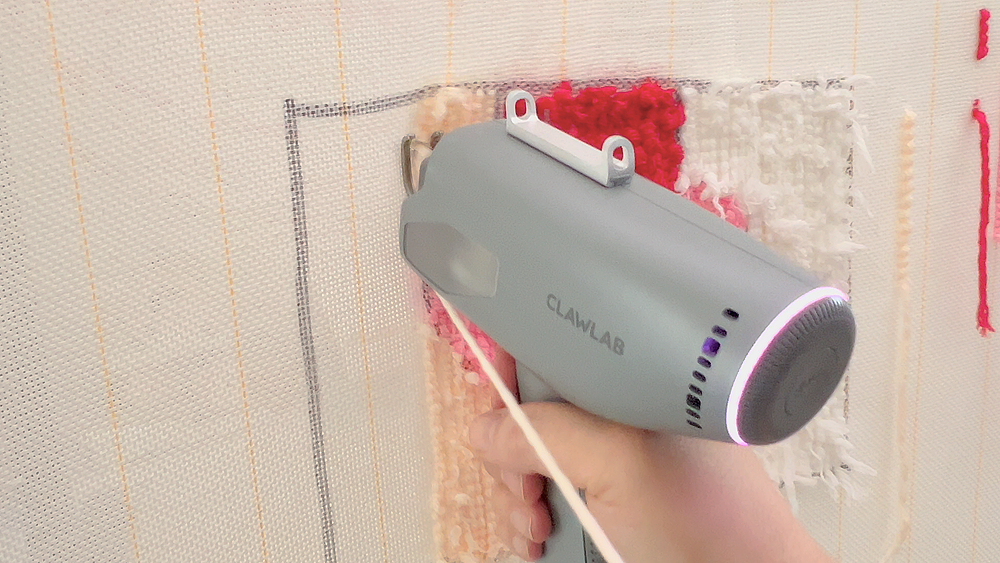
Hold the tufting gun firmly against the fabric and move slowly along your lines. Let the gun do the work, forcing it can tear the fabric or create uneven stitches. Work in sections and fill each color area completely before switching yarn colors.
Beginner tip:
Straight lines and curves take practice. Your first rug doesn’t need to be perfect, trimming later helps a LOT.

Tips for Getting a Clean, Professional Tufted Rug (Learn From My Mistakes)
I want to be very honest here, tufting has a learning curve. My first attempt was not pretty. I struggled to get the hang of it, made several holes in my monk cloth, and ultimately had to start over with fresh fabric.
That said, once it clicked, everything changed. If you’re feeling frustrated at first, you’re not doing anything wrong. These tips will save you time, fabric, and sanity.
1. Keep the Monk Cloth TIGHT (Tighter Than You Think)
This is probably the number one reason beginners tear their fabric.
Your monk cloth should feel tight like a drum. If there’s any slack, the tufting gun will pull the fabric instead of cleanly pushing yarn through, which leads to skipped stitches or holes.
What helped me:
-
Tighten the fabric before starting
-
Stop periodically and re-tighten as you work
-
Don’t ignore looseness, it gets worse, not better
2. Let the Tufting Gun Do the Work
This was a big one for me. I instinctively wanted to push the gun forward, especially when it felt like it wasn’t moving fast enough. Don’t.
Instead:
-
Keep steady pressure against the fabric
-
Guide the gun, don’t force it
-
If it feels stuck, stop and reposition
Forcing the gun is one of the fastest ways to rip holes in your canvas. Trust me I know!
3. Move Slower Than You Think You Need To
Speed comes later. In the beginning:
-
Go slow
-
Focus on control, not coverage
-
Especially slow down on curves and corners
Clean lines matter more than finishing quickly, trimming later will fix small imperfections, but torn fabric is harder to recover from.
4. Start With Simple Designs
I know it’s tempting to jump into a detailed design right away, but simple shapes are your friend when you’re learning.
Start with:
-
Bold outlines
-
Large color blocks
-
Minimal curves
Once you’re comfortable controlling the gun, detailed designs become much easier.

Look how awesome the front looks!
5. Watch Your Needle Angle
The tufting gun needle should be:
-
Straight
-
Flush against the fabric
-
Not angled or twisted
If the needle goes in at an angle, it increases the chance of tearing the monk cloth, especially near edges or tight curves.
6. Don’t Work Too Close to the Edge
Leave some space around the edges of your design. Tufting too close to the frame edge puts extra stress on the fabric and makes it easier to tear. You can always trim excess fabric later, you can’t fix a ripped edge mid-project.

7. Small Holes Aren’t Always the End
If you do make a small hole:
-
Stop tufting immediately
-
Check if the surrounding fabric is still stable
-
You can sometimes work around it
But if the hole keeps spreading or the fabric feels weak, it’s better to pause and re-stretch or replace the fabric rather than fight it. Trust me, starting over is frustrating, but it beats trying to salvage a piece that won’t hold up. I abandoned my first idea of making coasters and opted to start with a larger bolder design for my first complete project. And I’m so glad I did!

8. Practice Before Your “Real” Project
If you can, practice on:
-
Scrap monk cloth
-
The corner of your stretched fabric
-
A simple test shape
Even 10–15 minutes of practice helps your hands get used to the weight and motion of the gun.

9. Trimming Fixes More Than You Think
Your rug doesn’t need to look perfect during tufting. Once I realized how much trimming and carving clean everything up, it took a lot of pressure off.
Focus on:
-
Solid coverage
-
Consistent spacing
The refinement happens later.
Final Encouragement (Because You’ll Need It)
If your first rug isn’t perfect, welcome to tufting! Mine wasn’t either! This craft rewards patience, and once you get past that initial learning curve, it becomes incredibly satisfying. Don’t let one torn canvas convince you you’re “bad at it.” You’re just learning. And honestly? That’s part of the fun.
How to Back a Tufted Rug (3 Different Methods)

Option 1: TPU Powder + Heat Press (Most Professional)
Best for:
Floor rugs, wall art, selling finished pieces
Supplies needed:
-
Secondary backing fabric
-
Parchment or butcher paper
Steps:
Lay rug face-down

Sprinkle TPU powder evenly over the yarn backing

Place backing fabric on top
Cover with parchment

Heat press at 325–350°F for 20–30 seconds
Let cool completely
This creates a flexible, durable, professional backing.
I opted for this options since I had some TPU powder on hand and didn’t have any white glue or spray adhesive. It was a bit messy and I need to work on the perfect temp, but it turned out amazing nevertheless!
Option 2: White Glue (Most Common DIY Method)
Best for:
Wall hangings, decor rugs, beginner projects
Supplies needed:
-
White glue (Elmer’s or similar)
-
Foam brush
-
Backing fabric
Steps:
-
Spread an even layer of glue over the yarn backing
-
Avoid soaking the fabric
-
Press backing fabric into the glue
-
Let dry 12–24 hours
This method is affordable and beginner-friendly but slightly less flexible once dry.
Option 3: Spray Adhesive (Lightweight or Temporary Use)
Best for:
Wall art, practice rugs, decorative pieces
Supplies needed:
-
Heavy-duty spray adhesive
-
Backing fabric
Steps:
-
Spray adhesive evenly
-
Press backing fabric firmly
-
Let set per manufacturer instructions
⚠️ Not recommended for rugs that will be walked on — durability is limited.
Trimming & Shaping the Rug (This Is a Must)

Tools you can use:
-
Electric rug trimmer (best results)
-
Sharp fabric scissors (budget-friendly)
How to trim and shape:
-
Flip the rug so the front is facing you
-
Trim the surface to an even height
-
Carve between color sections to create definition
-
Clean up edges and round corners
This step instantly elevates your rug from “homemade” to intentional and polished.

See it in action below!
Pros & Cons of the Clawlab Tufting Gun & Frame
Pros
-
Beginner-friendly setup
-
Lightweight, easy-to-control tufting gun
-
Frame clamps directly to a table
-
Includes fabric and yarn to start immediately
Cons
-
Frame size limits very large rugs
-
Trimmer and backing supplies sold separately
-
Learning curve for clean lines and carving

Is the Clawlab Tufting Kit Worth It?
If you’ve been curious about tufting but didn’t want to build a frame from scratch or piece together supplies, the Clawlab H1 Tufting Kit is a solid entry point. The gun is comfortable to use, the frame is easy to set up, and with proper trimming and backing, you can create professional-looking rugs right at home.
Whether you back your rug with TPU powder, white glue, or spray adhesive, this kit gives you a strong foundation to explore tufting, for fun, decor, or even small-business potential.
Happy Tufting!


- Unlocking Sublimation: A Guide to Sublimation
- Sublimation Oven or Cricut Mug Press – Which is Best?
- HTVRONT Auto Heat Press Product Review
- Cricut Maker VS Cricut Maker 3 – Which Cricut Machine is Right for you?
- Cricut Glue Gun Product Review
- How to Sublimate Frosted Glass Can Tumblers with the Cricut Mug Press
- How to Sublimate Tumblers with the Cricut Mug Press
- How to Sublimate on Wood With or Without a Sublimation Printer