Looking for a creative way to celebrate America’s 250th anniversary while giving new life to something headed for the recycling bin? In today’s tutorial, I’m sharing how I transformed an empty pasta box into a beautiful Americana journal that’s perfect for preserving memories, documenting family celebrations, and creating a keepsake you’ll treasure for years to come. Let’s get started!
Some of the links in this post may be affiliate links – That means I may earn a small commission if you purchase through them at no extra cost to you. I only recommend products I personally use in my projects.

How to Make a Journal From a Pasta Box
This project is part of my America 250 series, where I’m sharing patriotic craft ideas to help you prepare for the United States’ 250th birthday celebration. What I love most about this project is that it combines paper crafting, junk journaling, and upcycling into one meaningful DIY.
The best part? It all started with an ordinary cardboard pasta box.
Supplies Used
For this Americana journal, I used:
- Empty cardboard pasta box
- Carta Bella Fourth of July paper collection
- Flags & Frills paper collection
- Coordinating cardstock
- Fabric-Tac adhesive
- Paper trimmer
- Craft knife
- Paper brayer
- Circle punch or circle cutter
- Eyelets
- Eyelet setting tool
- Waxed thread
- Large needle
- Self-laminating sheets
- Tab punch
- Self-adhesive Velcro dots
- Hot glue gun
- Metal book corners
- Star punch
As always, I’ll link as many supplies as possible for your convenience.

Why Use a Pasta Box?
One of my favorite things about paper crafting is finding creative uses for materials I already have around the house. Pasta boxes are surprisingly sturdy and provide an excellent foundation for handmade journals.
Instead of throwing packaging into the recycling bin, consider how it can become:
- Journals
- Memory books
- Mini albums
- Recipe books
- Travel journals
- Junk journals
- Keepsake books
This project proves that beautiful crafts can start from ordinary supplies.
Check out the full process in the video below:

Preparing the Pasta Box
The first step is turning the pasta box into a journal cover.
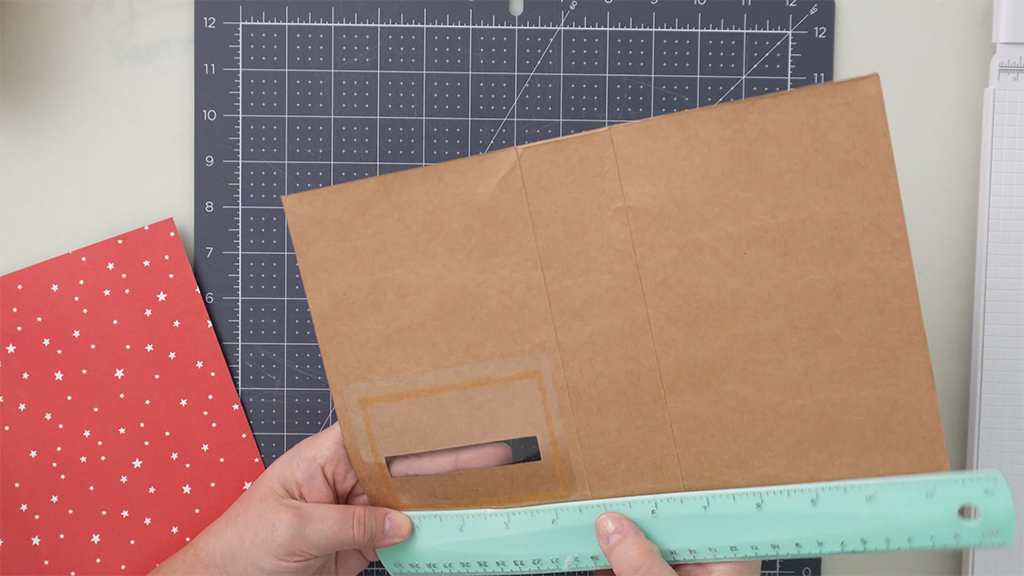
Begin by carefully opening the box and flattening it. Using a straight edge and craft knife, remove all of the box flaps so you’re left with a clean structure that resembles a book cover.
Since every brand of pasta box is slightly different, don’t worry if yours isn’t perfectly square. Minor imperfections won’t be noticeable once everything is covered with decorative paper.
After trimming away the extra cardboard pieces, you’ll have a sturdy base ready for decorating.
Covering the Journal
To create the Americana theme, I used papers from the Carta Bella Fourth of July collection.
Start by measuring each section of the flattened pasta box. Cut coordinating papers to fit each individual panel.
I like to use the first cut piece as a template for the remaining sections. This helps ensure that all the pieces remain consistent in size and fit neatly within the cover structure.

Once the pieces are cut, apply Fabric-Tac adhesive to the cardboard and attach the paper.
Although Fabric-Tac is marketed as a fabric adhesive, I’ve found that it works exceptionally well for scrapbook and paper crafting projects because it creates a strong bond without excessive warping.
One detail I didn’t worry about was the pasta box window. I simply glued the decorative paper directly over it. Once covered, you would never know the window existed.
After all the paper was attached, I trimmed any excess around the edges to create a clean, finished appearance.
Smoothing the Cover
To help the paper adhere evenly, I used a paper brayer to roll across the surface.
This step helps:
- Remove air bubbles
- Flatten wrinkles
- Improve adhesion
- Create a professional finish
If you don’t have a brayer, you can use a bone folder or even the side of a credit card.

Creating Journal Pockets
One of my favorite features in handmade journals is pockets.
Pockets provide a place to store:
- Notes
- Photos
- Ephemera
- Tickets
- Tags
- Journal cards
Using elements from the paper collection, I cut several card panels and transformed them into pockets.
To create each pocket:
- Cut the panel to size.
- Apply adhesive to three sides.
- Leave the top open.
- Cut a small notch using a circle punch for easier access.
The journal cards included in the collection worked perfectly because many featured decorative fronts and striped backs that could easily be used for journaling.
I added pockets to multiple sections of the journal, including the inside covers.

Creating the Journal Pages
After completing the cover, I turned my attention to the inside pages.
I cut multiple sheets of coordinating papers and cardstock to fit within the dimensions of the journal cover.
In total, I used approximately fourteen pages.
Some pages came directly from the Fourth of July paper collection, while others were created using kraft paper and additional coordinating designs from the Flags & Frills collection.
Mixing different paper patterns creates visual interest and gives the journal a more collected, handmade appearance.
Adding Eyelets and Binding
To bind the journal together, I first installed eyelets into the spine area.
Using a pen, I marked the placement of each hole before punching them.
This extra step helps ensure everything remains aligned.
Once the holes were prepared, I threaded waxed thread through a large needle and hand-sewed the journal signature into place.
Hand-sewn binding creates a classic journal appearance while remaining durable enough to hold additional embellishments as the book grows.
Making a Custom Closure
Because I knew this journal would eventually become much thicker, I wanted a closure that would expand as needed.
To create the closure:
- Cut cardstock to size.
- Laminate both sides using self-laminating sheets.
- Punch a decorative tab shape.
- Score the laminated tab to create flexibility.
- Attach it to the journal using hot glue.
- Add a self-adhesive Velcro dot.
This simple closure allows the journal to grow as more pages, photos, pockets, and embellishments are added.
The scored fold gives the closure enough flexibility to stretch around a fuller journal later.

Adding Decorative Details
Once the journal structure was complete, I focused on embellishments.
Decorative elements included:
- Metal book corners
- Eyelets
- Patriotic journal cards
- Decorative papers
- A layered “1776” embellishment
- An embossed star
For the star, I used a punch that not only cuts the shape but also embosses it at the same time.
The silver metal corners coordinate nicely with the eyelets and help give the journal a finished appearance.
Inside the Journal
Although the journal is functional now, it’s still only the beginning.
One of the things I love about junk journals and memory journals is that they evolve over time.
As I add:
- Family photos
- Journal entries
- Event memorabilia
- Additional pockets
- Tags
- Labels
- Ephemera
the journal will continue to grow and tell a more complete story.
I also created a belly band and several additional storage areas throughout the book for future additions.

An America 250 Memory Journal
The inspiration for this project came from America’s upcoming 250th anniversary celebration.
I wanted a dedicated journal where I could document:
- Family gatherings
- Fourth of July celebrations
- Community events
- America 250 activities
- Patriotic memories
Rather than mixing those memories into my regular journals, I wanted a special place dedicated entirely to this historic milestone.
By starting now, I’ll have a beautiful keepsake to look back on after the celebrations are over.
If you enjoy upcycling, junk journaling, paper crafting, or patriotic projects, I highly encourage you to give this idea a try. You can easily customize the theme for holidays, travel memories, family history, recipes, or everyday journaling.
And remember, you don’t have to use a pasta box. Nearly any recycled cardboard box can be transformed into a beautiful journal cover.
If you make one, I’d love to hear how you personalize it!
Happy crafting!


- What Caught My Attention at PRINTING United Expo 2026
- How to Emboss Acetate and Composition Notebook Covers
- How to Make a Reusable Sticker Sheet from Sticker and Laminate Backing Sheets
- DIY Clear Acetate Composition Notebook Cover
- Peel-A-Pocket™ Adhesive Pockets for Journals, Scrapbooks, Bibles and More
- How to Customize a Half-size Composition Notebook for Bible Journaling